Overview
DoNotPay: AI-powered tools
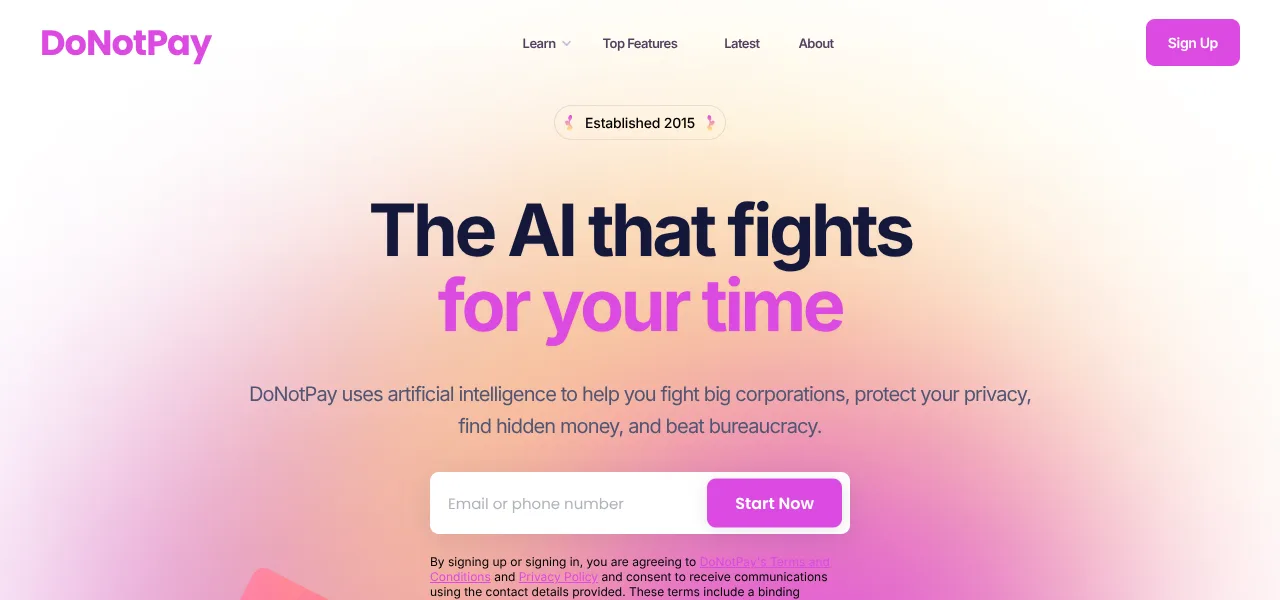
DoNotPay stands out as a pioneering AI consumer champion, leveraging artificial intelligence to empower individuals in their battles against big corporations, while fostering a robust ecosystem of over 100 AI-powered tools to streamline processes, recover lost finances, and reclaim time, making it an indispensable resource for those seeking to navigate the complexities of modern consumerism, particularly benefiting individuals and small businesses seeking to cancel unwanted subscriptions, lower bills, and dispute parking tickets, although its effectiveness can vary depending on the specific circumstances and the tool's capacity to adapt to diverse user needs, requiring a degree of technical awareness to fully exploit its capabilities, and while it is not a replacement for professional legal advice, DoNotPay's AI-driven platform provides a unique conduit for accessing legal information and self-help resources, ultimately delivering a potent cocktail of time savings, financial recuperation, and enhanced consumer protection, with its free trial card being a prime example of how it combines AI-driven insights with user-centric design to safeguard against unexpected charges, all while navigating the intricate balancing act between convenience, security, and regulatory compliance, hence, offering a distinctive value proposition that resonates with consumers seeking to rebalance the scales in their favor, and by doing so, DoNotPay carves out a compelling niche for itself within the broader consumer advocacy landscape, where the confluence of AI, legal expertise, and user-centric design coalesces to forge a powerful toolkit for the digitally empowered consumer, thereby setting a new benchmark for consumer-centric innovation and AI-driven advocacy, ultimately, DoNotPay's commitment to harnessing the potential of AI to drive consumer empowerment and simplify complex bureaucratic processes underscores its status as a trailblazer in this domain, which in turn, has significant implications for how we think about the future of consumer protection and advocacy in the digital age