Overview
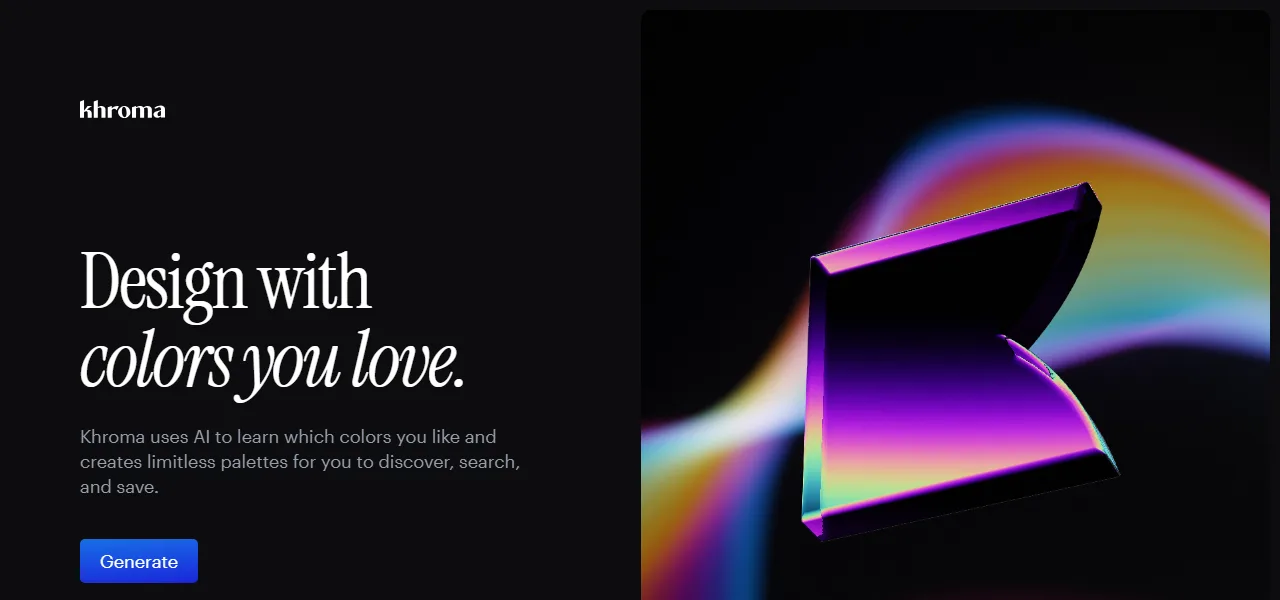
Khroma: AI-powered color palette generation
Khroma stands out as a revolutionary AI color tool, empowering designers to unlock a vast universe of color combinations and palettes that perfectly capture their unique style and aesthetic, with its neural network-powered algorithm learning and adapting to individual preferences in real-time, allowing for an infinite exploration of color possibilities, including typography, gradient, palette, and custom image generation, while also providing an advanced search functionality to filter and discover specific hues, tints, and values, making it an invaluable resource for visual artists, graphic designers, and branding experts seeking to elevate their creative work, although it does require a basic understanding of color theory and a willingness to experiment and fine-tune the algorithm's suggestions, which can be a time-consuming process, especially for those without prior experience in color design, yet the payoff is well worth the investment, as Khroma enables users to curate an unparalleled library of bespoke color palettes, complete with detailed information on hex codes, RGB values, CSS code, and WCAG accessibility ratings, ultimately streamlining the design process and freeing up more time for creative expression and innovation, and with its seamless browser integration and intuitive interface, Khroma has the potential to transform the way designers approach color selection and palette creation, making it an essential tool for anyone looking to push the boundaries of visual design and stay ahead of the curve, by providing a level of customization and control that is unparalleled in the industry, and allowing designers to focus on what matters most - creating stunning, effective, and accessible visual experiences that leave a lasting impression, and with its ability to learn and adapt to individual preferences, Khroma is poised to become an indispensable asset for designers and creatives alike, and its impact on the design industry will undoubtedly be significant, as it continues to evolve and improve with each passing day, and its potential to revolutionize the way we think about color and design is vast and exciting