
Overview
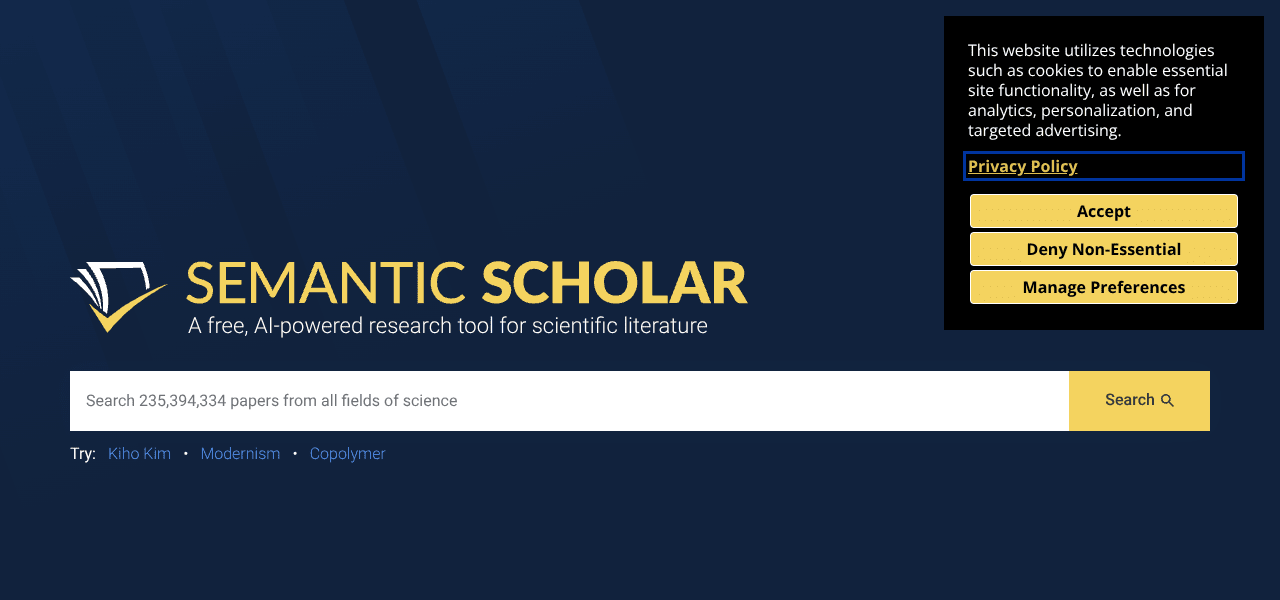
Semantic Scholar: Academic search with AI summarization
Semantic Scholar is an AI research tool for researchers, analysts, students, journalists, founders, and knowledge workers who need reliable information discovery. It offers Academic search engine for scholarly articles, citations, and research summaries, making it useful for literature review, market research, source discovery, competitive analysis, evidence gathering, and knowledge synthesis. The platform helps users apply AI to practical work instead of treating automation as a separate experiment. Key capabilities include paper search, recommendations, and citation tracking, which gives Semantic Scholar relevance for buyers comparing AI research software, product alternatives, and specialized AI tools. Users often choose Semantic Scholar when they want free and comprehensive without building a custom workflow from scratch. Its freemium pricing makes it easy to test before upgrading for higher limits, team features, or heavier production use. In day-to-day use, Semantic Scholar can support repeatable processes, improve output quality, speed up production, and help teams move from ideas to finished work with fewer manual steps. The tool is especially valuable when users need a focused solution that is easier to adopt than a broad enterprise platform. Important considerations include basic interface and limited features, so buyers should match the product to their budget, technical comfort, content volume, and collaboration needs. For searchers evaluating Semantic Scholar reviews, Semantic Scholar pricing, Semantic Scholar features, and best AI research tools, this profile explains where the product fits and what outcomes it supports. Overall, Semantic Scholar can help deliver shorter research cycles, stronger source awareness, and more confident decision making for individuals and teams that want a reliable, easy-to-evaluate AI solution.